
BTM-3566
BTM-3566 is a novel, orally available small molecule designed to target a wide range of cancers, including both hematologic and solid tumors. Its initial clinical focus is on mature B-cell lymphomas, such as mantle cell lymphoma (MCL), diffuse large B-cell lymphoma (DLBCL), and follicular lymphoma (FL).
In preclinical studies, BTM-3566 demonstrated potent anti-cancer activity, driving significant tumor regression – and in many cases, complete tumor elimination – in models resistant to standard treatments, including CAR-T cell therapy. BTM-3566 works by disrupting the mitochondrial function in tumor cells, triggering their natural cell death process (apoptosis). With its unique mechanism of action and strong preclinical data, Bantam also plans to expand
clinical development into solid tumors, broadening its potential impact for patients with limited treatment options.
clinical development into solid tumors, broadening its potential impact for patients with limited treatment options.
In February 2025, a Phase 1 clinical trial evaluating BTM-3566 in relapsed/refractory mature B-cell lymphomas was activated. For more information about the trial, visit ClinicalTrials.gov and search NCT NCT06792734.
DID YOU KNOW?
There is extreme unmet need in relapsed/refractory DLBCL, where median survival is 7 months with existing standard of care therapy.
How BTM-3566 works
BTM-3566 targets mitochondrial dynamics leading to cellular stress and tumor cell apoptosis
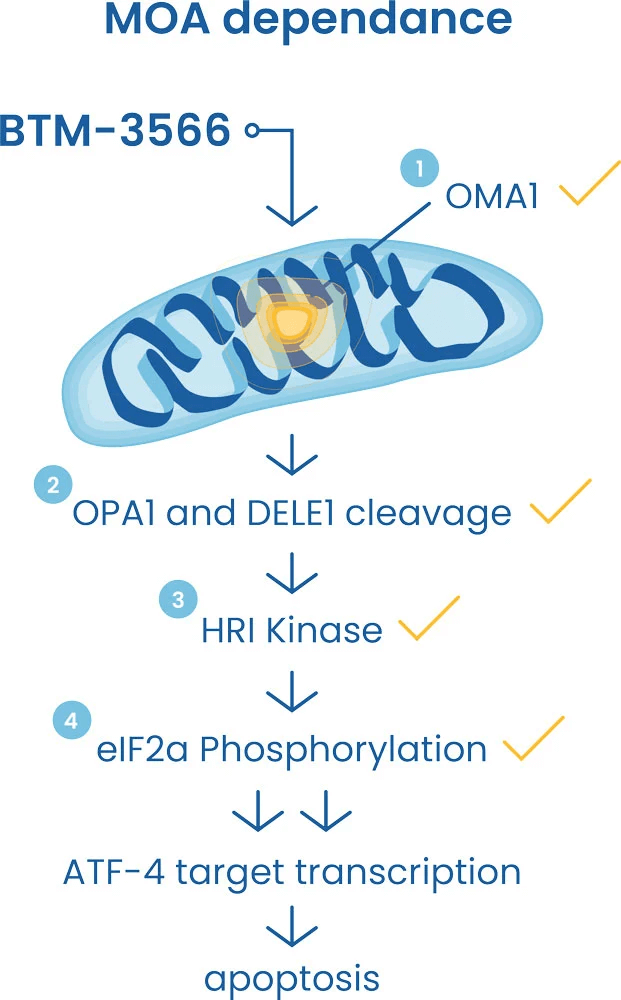
- BTM-3566 induces activation of OMA1, causing cleavage of:
- Mitochondrial proteins OPA1 and DELE1
- This leads to activation of HRI Kinase and phosphorylation of eIF2a
- eIF2a regulates the Integrated Stress Response (ISR), triggering homeostasis adaption or apoptosis depending upon cellular context
BTM-3566 modulates mitochondrial dynamics leading to cellular stress, apoptosis and rapid tumor regression in varied models of lymphoma
We are an early mover in the field of mitochondrial homeostasis, using our pioneering science and unrivaled expertise in mitochondrial cellular biology to revolutionize oncology.
We are seeking partners and additional investors to accelerate our clinical research and help bring novel cancer therapies closer to patients in need